
False information shared without the intent to deceive.
People may believe the information is true and share it to help others. The information is false, but there is no intention to mislead.
MEDIA LITERACY BASICS
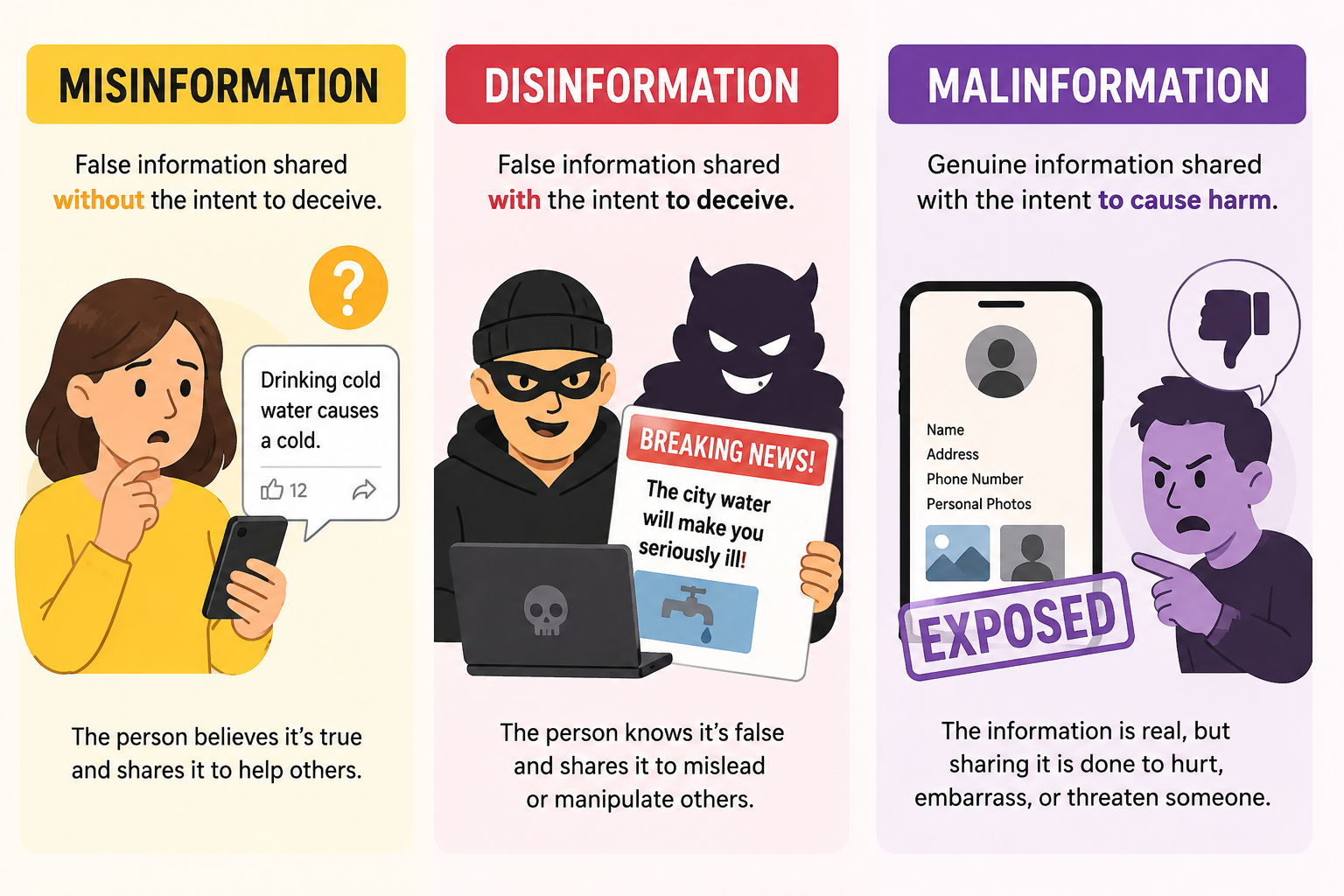
Misinformation means sharing false or wrong information without intending to deceive others. People who pass it on usually believe it is true and want to help, but the facts are wrong. Even when there is no bad intent, misinformation can still cause problems.
For example, imagine someone sees a social media post claiming that a popular app is going to start charging all users a monthly fee. Believing the post is genuine, they share it with their friends and warn them to be prepared. The information is actually false, but the person who shared it was not trying to trick anyone—they simply believed the claim without checking the source. That is misinformation.
The main difference between misinformation and other types of false information is the intent behind sharing it. Let's see how it compares with disinformation and malinformation.
UNDERSTAND THE DIFFERENCE
Though these terms sound alike, they describe different things. Here is what each one means:
People may believe the information is true and share it to help others. The information is false, but there is no intention to mislead.
Disinformation is false information that is spread deliberately to mislead or cause harm. The person or group sharing it knows it is not true but still shares it to confuse people, promote an agenda, or create conflict. Disinformation has been used in political campaigns, election interference, and scams.
This often happens when someone shares private information or takes facts out of context to embarrass or harm another person. For example, sharing private messages publicly to shame someone is malinformation. The information is true, but it is used in a harmful way.
| Type | Is the information true? | Is there an intention to deceive? | Simple example |
|---|---|---|---|
| Misinformation | ❌ False | ❌ No | Someone shares a false social-media claim because they genuinely believe it is true. |
| Disinformation | ❌ False | ✅ Yes | Someone deliberately creates a false story and shares it to mislead people. |
| Malinformation | ✅ Usually true | ✅ Yes, to cause harm | Someone shares a person's genuine private information publicly to embarrass or harm them. |
EASY WAY TO REMEMBER